



Source: WREG.com, Oct 27, 2009
The City of Memphis Animal Shelter was the scene of a early morning raid by Shelby County deputies Tuesday morning.
Shelby County District Attorney Bill Gibbons and Shelby County Sheriff Mark Luttrell say deputies with the Sheriff’s Office executed a search warrant at the shelter located at 3456 Tchulahoma Road and temporarily secured the facility as part of an investigation into alleged animal abuse and cruelty.
District Attorney Gibbons requested the Sheriff’s Office investigation of the City of Memphis Animal Shelter earlier this month after receiving a tip from a citizen on the conditions at the shelter.
Sheriff Mark Luttrell told us, “We are finding that some of the allegations that we have heard are true. That will just take a more through investigation to determine just how bad the situation is but on its face, we can definitely see that there are some problems here.”
According to the search warrant, “detectives have learned that some animals have been deprived of food and water while at the Memphis Animal Shelter…” and while in the shelter’s care, “some dogs have been starved to the point of requiring euthanasia.”
According to the search warrant, some of the dogs “are involved in court cases involving dog fighting and have been marked ‘Hold for Court.’”
Additionally, the warrant says that shelter employees keep “…dogs that are to be quarantined for rabies with dogs that are not required to be quarantined in the same kennel.”
“The information we received about the conditions of the Memphis Animal Shelter clearly warranted a criminal investigation, and it is very possible that one or more individuals could face criminal charges based on the outcome of the investigation,” said District Attorney Gibbons.
Janet Hooks, Director of The Division Of Public Services and Neighborhoods, suspended 12 employees to allow investigators unfettered access to the shelter and the animals. No one has been charged.
While deputies are executing the search warrant, the facility will not be open to the public, and deputies will supervise limited employees inside the shelter. Animals brought to the facility during this time will be transferred to another shelter in Shelby County.
Trained investigators with ASPCA and emergency responders with the American Humane Association are at the shelter assisting the deputies.
Source: PittsburgPostGazzette.com, Nov 3, 2009
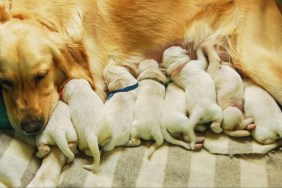
A domesticated mutt is acting as the surrogate mom for nine newborn African painted dog pups at the Pittsburgh Zoo & PPG Aquarium, a ground-breaking arrangement for the rearing of the wild dogs, whose mother died shortly after they were born.
Honey, a mixed-breed dog from the Western Pennsylvania Humane Society’s North Side shelter, is nursing the black and white puppies that were born at the zoo Oct. 25, and zoo officials say all are gaining weight and doing well.
It’s the first time such a domestic surrogate has been used to mother and feed new-born painted dogs. The pups’ natural mother, 10-year-old Vega, died of a ruptured uterus.
The mortality rate for African painted dog pups, even with a healthy mother, is 50 percent in the first 30 days, in the wild or in captivity.
Source: TheHuffingtonPost.com, October 20, 2009
A chewed remote control, a dog, and $62.50 less in the bank account.
For Greg Stroke, this could only mean one thing: his dog had purchased 5,000 Xbox points — worth $62 — while he and his girlfriend were asleep.
Stroke saved his credit card information on his remote control to make it easier to buy video games using Microsoft Xbox points — so easy, in fact, that a dog could do it.
When the dog chewed the remote, the points were bought. “i just wish they’d make it a little harder to purchase points,” Stroke lamented.
Source: LocalNews8.com, Nov 1, 2009
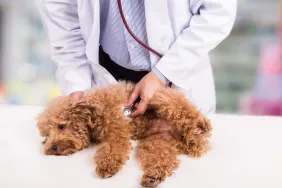
It’s a well known fact that blood transfusions can save lives. But what happens when Fido needs blood? It’s not so easy. But one local veterinarian is changing all that.
A few weeks ago, a 100-pound rottweiler in Blackfoot was saved because of a new canine blood donation program.
Dr Adam Petersen is bringing Hemolife to eastern Idaho.
He said he’s tired of animals suffering because they can’t get the blood they need.
“The dog was in very bad shape at the time. Two days later, I called the veterinarian and the dog was doing great,” said Petersen.
Right now, there are only a handful of dogs in the program.
“We are both civic minded people so we decided it was something we wanted to become involved with,” said Michael Crapo, who signed up his two dogs, Jasmine and Grizzly Bear to participate in the program.
“It just is warm and fuzzy. I think it’s great. I think that it is needed. I know that blood can be a problem in this area,” said Jo Knopf, who signed up her dog Brom.
Not just any dog can donate. They must be happy, healthy and weigh more than 50 pounds. Your dog must be between one and seven years old and able to stay still for ten minutes.
But those who do pass the test, Hemolife pays $50 per donation.
If you would like to help, a small blood sample must be taken to determine blood type.
Blood tests for potential donors are taking place on Thursday at the Animal Health Clinic in Blackfoot and Skyline Animal Clinic in Idaho Falls.
Source: DVM News Magainze, October 30, 2009
Natural pet-food manufacturer Wysong Corp. recalled more batches of dry dog food because of moisture contamination that led to mold in other batches.
Wysong notified distributors and retailers to stop selling food with three more lot numbers: Maintenance 090817, Senior 090811 and Synorgon 090629. Those three lots join five others recalled earlier in the month: Maintenance 090617, 090624, 090706, and 090720 and Senior 090623.
Previously, online commenters on animal-focused blogs and Web sites complained that Wysong informed retailers and distributors weeks before announcing the recall nationally to consumers on the Web. Wysong then directly answered Web-site visitors’ questions about the issue.
“When we determined a recall was necessary, we put our focus into alerting those that actually received the products, not those who had no reasonable chance of acquiring the affected products,” says the notice in response to the selectively publicized recall notice.
Wysong believes the mold likely was caused by a faulty moisture-checking device and high heat and humidity during manufacturing in June, July and August.