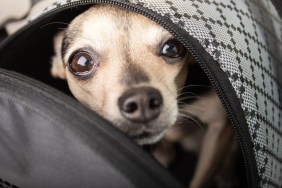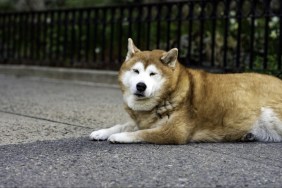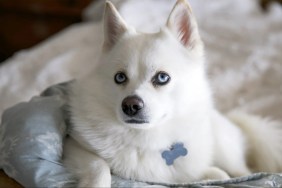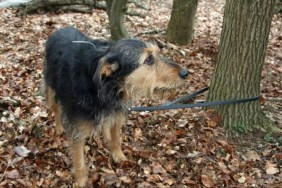

Everyday I play the same game with my Houndy-mix Eddie. I give him a rawhide and he buries it in the yard. He spends a few good hours being paranoid about it -rushing to the back garden at the slightest sound; leaping to his feet if the other dogs go outside; and finally not-so-cleverly giving away the secret location. When its time to collect the bone I move around the yard and watch Eddie's face. I can tell by the paranoid look in his eye when I am getting warm... getting warm... RED-HOT! Then, I collect the rawhide and store it for the next day.
Today's "Secret" Location
Why do dogs bury things?
There appears to be no answer. Don't get me wrong, there is a good deal of conjecture and lots of opinions, but no real scientific answers. The common theories seem to be that dogs are:
1. Saving snacks for later
2. Hiding food from other hunters
Whatever the reason, some dogs are compelled to bury their stuff. From a behavioral perspective the "WHY" is only one part of the mystery. The "HOW" is equally as interesting. The burying of bones (and other stuff) is a Fixed-Action-Pattern. This means that all dogs follow the same basic recipe and that they don't need to learn the ropes from any other dog -it comes pre-installed as a complete behavior.
Scratch with paws...
Push with nose...
Scrape with muzzle...
Push with nose...
Scrape with muzzle...
There are variations for sure, but the basic building blocks are performed the same way by the tiniest lapdogs and the biggest hounds.
So, why do dog's bury bones?
Because their genes tell them to; because long ago dogs that buried stuff had some kind of advantage over those that didn't and they survived and produced more dogs that buried stuff.
How serious is it when a dog fights?
Most dog fights are minor spats -I consider them playground scuffles. There's a lot of noise and a lot of commotion, but when the fight is interrupted, the dogs go their separate ways, shake-off the fight and resume playing as normal. However if your dog is consistently getting in fights you should contact a certified trainer or behaviorist so that the problem can be diagnosed and a behavior modification plan can be implemented.
The usual Cause-Of-Fight Suspects are:
1. The dog is uninterested/uncomfortable with other dogs. Dogs like this can appear to do fine at a park, but rarely seek out other dogs for play. they tend to go about doing their own things (sniffing, playing with a toy, or walking by themselves or with their people). Fights erupt when other dogs try to engage the loner-dog in play, try to sniff the unsocial dog, or inadvertently invade the sensitive dog's personal space.
2. The dog loves playing with other dogs, but gets carried away and the play tips into a fight. This is common with rough-players like young Labradors, Boxers, Bulldogs, Staffordshire Terriers, Jack Russell Terriers and Ridgebacks (individual dogs of any breed can enjoy rough play, this list is not complete by any means). Dogs that like rough play often don't take play-breaks to sniff or change roles (chaser vs. chasee) they simply keep mouth-wrestling until one or both dogs are unsure about the status of the game: Real or play?
3. The dog gets along fine with known dogs and often plays well within that social group, but guards resources from unknown dogs. Resources are anything the dog feels are valuable. Some dogs guard toys, some dogs guard their playmates and some dogs guard people, food and locations (the park bench).
More on Playful Body Language >>>click here.
More on Guarding >>>click here.
Whether your dog fights a lot, or has only been in one fight...
The seriousness boils down to ONE KEY QUESTION:
How much damage did your dog do to the other dog?
Dogs have what trainers, behaviorists and veterinarians call Bite Inhibition. This refers to the amount of tooth/jaw force used by a dog when they fight or defend. Bite Inhibition is learned when the dog is a puppy. At about 3-4 months of age, a dog's socialization window closes and the dog will have established their Bite Inhibition. Puppy classes include puppy-to-puppy playtime to increase the practice time puppies have and improve their Bite Inhibition skills.
Dogs with Poor Bite Inhibition (sometimes called a Hard Mouth/Bad Mouth) use greater force than is needed and cause damage: punctures & tears.
Dogs with Good Bite Inhibition (Soft Mouth/Good Mouth) limit the force that they could use and do little to no damage when they bite: yelp, brusie, scrape.
More on Bite Inhibition (appropriate corrections in play) >>>click here.
What it means...
Bite Inhibition cannot be re-learned, trained, or punished out. A dog that fights vary rarely, but who causes serious damage (veterinary care and sutures required) is far more dangerous than a dog that fights all the time, but never leaves a mark.
If your dog has seriously injured another dog, the prognosis for rehabilitating the dog's Bite Inhibition is poor. Dogs that cause damage, even if they fight rarely, should be muzzled at the dog park. Exceptions are rare and I limit them to ear-tears. Ears are thin, tear easily and bleed profusely. But exceptions are rare and this decision is left best to training professionals.
So if you have a dog that has injured another dog in a fight, the dog should always wear a MUZZLE. There are many, perfectly happy, muzzled dogs. It beats never getting out to play, paying large vet bills, or going to dog court!
NOTE: A Muzzle is NOT a replacement for TRAINING.
Dogs that fight need help from a certified trainer!
An Un-Happy Celebration

My poor hound-mutt, Eddie (short for Edward J. Snuggle-Bottom Pants-Man, III) is already having a terrible 4th of July weekend. To be fair, Eddie is an extreme case; he's a rescue and x-rays have confirmed that he was shot several times. The bullets are buried deep in his backside, but his fragile mental state is plainly obvious.
Like many fears Eddie's "consistent concern" with noises has grown to include any loud noises. A big gust of wind is enough to put him on high alert, but fireworks are the worst and I pay special attention to Eddie each year as the Fourth of July nears.
The climate of San Francisco is virtually thunder-storm free, but if it were not I would likely consult with Eddie's veterinarian and begin the process of finding him the right anti-anxiety medication. As it is, the incidents are fairly isolated and we have gotten by with the following routine:
Like many sound-phobic dogs Eddie is prone to pacing. While confinement can exacerbate the panic response (they feel stuck), many dogs do well having access to a small den in a dark room. Eddie does best when confined to the back of the house in a small room with little light and his crate open and available to him. Some dogs also enjoy a small fan or a radio.
In the days leading up to the Fourth of July there are often single firecrackers that go off. For each of these Eddie gets a huge surprise delivery of broiled chicken (about 1/2 cup of 1" pieces). In fact I often don't feed him much in the days preceding the 4th except his a light kong (his usual meal stuffed into a rubber toy and frozen) and the "Noisy-Snacks!" Eddie gets these "room-service" style, meaning: he doesn't have to do anything for them, I bring them to him.
While it is tempting to hold, pet and sooth my terrified dog with sweet words, this has never helped. In fact it actually seems to make things worse. So I must put aside my urge to comfort as a human being and just do my best to make him believe that noises bring snacks. Incidentally these "Noisy-Snacks" are special to this time of year and that seems to really help. As does getting an early start.
In preparation for the big celebration, Eddie fasts all day (with the exception of a few pieces of chicken for the early booms, whizzes and pops). that evening I usually give Eddie a nice big frozen Kong stuffed with rice and hamburger and cheese and small chunks of pig's ears. This is all carefully layered into Eddie's Extra-Large Kong and frozen that morning. At the first pop that evening I deliver Eddie his Kong into the crate and turn on some music -(Eddie likes Johnny Cash & Patsy Cline). I deliver additional Noisy-Snacks for outstanding sounds, but otherwise I leave Eddie alone.
He usually has some soft stool the next day (either from the stress of the food, I'm not sure) and is on-edge for about a week. Still that's a small price to pay. If your dog panics because of loud noises, please plan to spend some time to make arrangements to help them cope with the fireworks. Take special care to make sure they are safe indoors. Too many dogs are hurt and injured each year when they panic and try to escape the scary storm of booming, popping, whizzing noises. In particularly bad cases, anti-anxiety medication can usually be prescribed by your veterinarian.
HOPEFUL FOR A HAPPY FOURTH

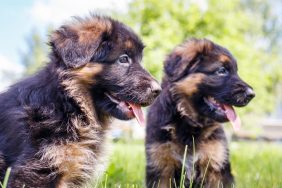
A well adjusted puppy is enthusiastic about playing.
They are young, rambunctious and sometimes over-eager to engage other dogs in play. While it is not wrong to ask another dog to play, trouble can arise when they don't notice that the other dog is not interested in playing.
Young, playful pups are often too young to have learned how to read the intention-signals of other dogs, they sometimes get corrected.
Corrections from an older dog can be a learning experience, but owners need to protect their pups from getting harsh corrections. To minimize the risk to your pup make sure that they have LOTS and lots of playtime with puppies their own age.
Puppy classes are a great place to have your pup play with other puppies.
A good puppy class will be filled with ONLY other puppies of a similar age. Puppy play-time will cushion your pup's bank of experiences. Puppy-to-puppy play will likely be appropriate and fun and pad your pup from associating play with bad things (older, un-playful dogs). Lots of puppy-play will help your puppy associate an eventual correction with their actions or the other dog's body language.
When playing with older dogs, a correction is likely.
The older dog should have EXCELLENT play-skills and give LOTS of warnings to the puppy. When the older dog has finally had it and corrects the pup it should be a fast and timely correction. The puppy will likely yelp and it will be over. The older dog should not pin the puppy or keep fighting. There should be NO harm and the pup should shake it off quickly and be back to his/her bouncy self.
A PUPPIES ERROR IN JUDGEMENT
Meet the dogs...
The FOCUSED, OLDER DOG is played by K-9 ANGUS, FEMA Certified Search & Rescue Dog, CA Task Force 3
see videos of Angus @ work -CLICK HERE
The PLAYFUL & OVERENTHUSIASTIC PUPPY is played by JUPITER, 4 month old, male beagle
Opening Act: A polite invitation to play.
Act -II: Stop ignoring me. Don't you want to play?
Act -III: You can't resist me; I'm right here!
Act -IV: Knock it off pup!
Act V: Pleeeese, play with me.
Final Act: Too-bad, puppy; I warned you.
Second Show: Hey, who are you?
Even A Well-Behaved Dog Is A DOG!
Dogs need to do Dog-Things. Puppies, like children need to do everything and they have short attention spans.
A common behavior concern is chewing! Punishing a dog for being a dog is a sure way to ruin your relationship with your new pup. Dogs need to chew. They should not be punished for being dogs.
Puppies and inexperienced dogs see the whole world is an unexplored chew toy. There are endless places to find new chews and hundreds of ways to sneak a chew. If your dog isn't getting the chew-fun she needs from her toys, your dog will find something new to chew.
My clients are constantly frustrated and overwhelmed when they focus all their energy on catching their dog chewing forbidden items (table legs, tissue, clothes, remote controls, etc...) Make your life easier; make your puppies day. Put most of your energy into creating chew options, not just limiting them. Make toys and chew puzzles fun and exciting for your dog.
Then watch your dog! I spend countless hours just watching my dogs enjoy their chew-time. Their chewing pleasure is a site to behold. You too can learn to marvel at their canine abilities to chew, nibble, rip and dissect.
Just pick the items they chew on for them and make them worth their while so they won't want to waste time experimenting for better options. Then take some time to appreciate what they liked most, what they were good at chewing and how they can lull themselves into a near meditative state on the perfect chew.