






Network-blogs-hdr
Many dog owners tell me that one of the biggest challenges of dog ownership is training a dog not to bark at the wrong time or place or person. Before you start applying dog discipline techniques to train your dog, remember that it’s perfectly natural for dogs to bark. It’s how they express themselves.

A dog that’s happy will also bark. And we all want our dogs to be happy. You might think that training a dog not to bark goes against nature.

Well, it’s really the “wrong time/place/person” that concerns us. The good news — like all actions of a dog, the proper training and techniques will definitely help.

Let’s look at 2 very effective dog discipline techniques when training a dog not to bark –

1. Be firm with your dog that you want him or her to stop barking

Like any other dog behavioral training, you must convey strongly to your dog when you don’t want him or her to do something, in this case barking. In other words, stop when you want it to stop.

Here’s what to do when training a dog not to bark. After a few barks, tell your dog in a firm strong voice to “Stop!”. At the same time, show him or her a yummy treat. In all likelihood, your dog will stop barking, hoping to have a bite at the treat. On your part, give it a moment of silence, praise your dog, then give the treat.

The next time you do this, increase the interval between the barking stopping and the handing over of the treat. You can see that training a dog not to bark is not all that difficult right?

2. Give your dog enough exercise and activity

As you know, dogs lead simple lives. You are the center and walkies are the highlight of the day.

It’s no wonder that many dogs bark out of boredom, frustration or lack of attention. So, in training a dog not to bark, make sure you pay him or her enough attention, especially with good solid walks. Heck, teach your dog new tricks. In other words make your dog’s life fuller. You’ll find that he or she will want to bark far less.

As you can see above, you just have to be firm and in charge. And, you need to ensure your dog has a full life. Strangely enough, most of us don’t realize that the solution usually just involves making sure your dog is not bored!

Try the 2 techniques above for training a dog not to bark and see for yourself how simple and effective this kind of dog discipline training can be. The best part is your dog will respect you and love you more. And who wouldn’t want that?

By: Damon Trentwood

About the Author:

Vegetarian Cooking

There are 0 comments about this post. Add yours!
There is simply no doubt that dog-training techniques are essential to get a well-disciplined and gentle dog finally. But this does not indicate that the reasons and techniques should always be the same. If both of Mr. Sam and Mr. Tom are found to train their dogs, they can be asked of the reasons. Both of them will speak of reasons but they happen to be markedly different. This makes one to conclude that there are a good number of reasons to train.

The reason hence can be any and one of them is popping. Truly speaking several dogs are found with this nasty habit. This single habit of your beloved dog is enough to malign your reputation in the house and your better half or wife may thrash you also. Now, if you are a hunter, you shall have to find the ideal dog after researching the breeds. When you get it, you shall have to start from scratch and train it according to the need. It is necessary to implant the seeds of discipline and obedience in the dog through training. If you fail to do this, the dog may be a source of immense perturbation to you.

Well, other than this there is also the need of good dog behavior training in other domains also. It can be any like teaching it to cross streets, not to smell the fetid litterbins and not quarrel with other dogs. What is required above all is to treat it like a little child of your own and for betterment it should be taught discipline. For this reason you shall always have to keep a close watch on your pet. Be firm to see that it is learning the home rules at first.

For all these you are surely going to begin your own training process. You can get the pertinent ideas by going through the related books, periodicals and also the Internet. But keep in mind to make the course of training funny. Now, if you have some better dog training techniques and they can be utilized, do it without any delay. It is necessary to keep your dog happy. Through this the training can be an easier one and it can learn in a better manner.

It is found that dogs have great affections for their trainers and this should be utilized at the best. That’s why you shall have to also show you affections towards it and pat it once in a while. This helps to ease the relationship and coordination between you two.

Do not ever try to punish your dog throughout the training program. This will bring forth a negative effect even if you do this inadvertently. You will at once notice a profound transformation. The dog will start disobeying your every order and will remain afraid of you. This will destroy the cordial relationship.

You should be patient throughout the training course. The dogs do require a specific time to learn any command and act in view of that.

Never forget that the success depends on the trainers.

By: Rikard Ingvarsson

About the Author:

Save yourself a lot of time as a dog owner and train your dog to be obedient. It gets so much easier for both you and your dog when you have trained your dog´s obedience. Click here to learn more about training your dog.

dog training

There are 0 comments about this post. Add yours!
Dogs are man’s best friends. When you ultimately made that big decision to own a dog, you expected it to provide you companionship, be a pleasure to show off to your friends and just plainly be a joy to own. So off you go to the pet shop, choose a dog that catches your attention and bring him (or her) home.

But then, the horror begins. The dog you brought home seems to be anything but the adorable creature you expected it to be. His (or her) behavior is terribly unpredictable and can even be downright embarrassing at times. The dog you brought home to provide you companionship just sits around at the corner of your home, seemingly bored at the things happening around him (or her).

So you read all the books and even went to a dog training class to teach your dog a thing or two about obedience, but you still get no good results. This may lead you to think there is something inherently wrong with your dog. Is he (or she) just plain lazy, hardheaded or a little bit slow in the head?

Have you considered its lineage? Some breeds of dogs are simply not born to be followers; making them naturally hard to train.

Have you taken an honest look at your self and your training style? Are you observing the proper dog training techniques? It would be a good idea to make sure that you do, to make both of your lives easier and to make your dog training sessions an enjoyable and fruitful experience for both of you. To help you make your training sessions easier, here is a list of the most commonly committed dog training mistakes. Please avoid them at all costs.

•Not giving enough rewards during the training - Providing treats is one indispensable part of dog training. It gives your dog enough motivation to continue following your commands satisfactorily. However, some dog owners shun this idea. They simply do not want to provide treats during their dog training sessions because they feel that they would not retain authority if ever they do so. They believe that it is the dog’s role to follow their commands and giving them treats would be like bribing them.

•Being too controlling - Some owners simply have a “control” problem and can be quite overbearing, nagging and perfectionist during their dog training sessions. If you happen to be one of these control freaks and you own a hard-to-train dog, you can expect to be in for a very hard time!

•Being a training fanatic - Training your dogs too often, or repeating the same exercises over and over again, may bore him (or her). This is especially true when you own an independent dog, one that was simply not bred to obey his master’s commands. Among these are dogs that belong to the non-sporting, terrier and hound breeds.

•Not giving attention to the dog’s emotions - Some owners neglect to give enough attention to their dog’s feelings during their training sessions. This can be a major problem indeed! Especially during training, it is important to consider how your dog is feeling to get the most out of your efforts. So whenever you observe his (or her) reluctance in doing the exercises, if you notice excessive yawning or that your dog simply refuses to look at you, it may be best to stop and let it loose for a while. Your dog might already be tired or bored from all that physical exertion!

By: Michael Russell

About the Author:

Michael Russell
Your Independent guide to Dog Training

Vegetarian Cooking

There are 0 comments about this post. Add yours!
Training a dog can be enjoyable and rewarding. Whether conducted in a private setting or a classroom setting, it requires consistency, direction and firmness. In general, dogs are eager to please, but teaching them new skills takes time and energy.

It’s not necessary to have formal training to teach a dog behavioral skills. It is necessary, however, to be consistent, firm and loving, while making it fun. When dogs know what to expect from their masters, they’re much more likely to comply. Here are a few tips to make your training experience a rewarding one for both you and your pet.

First of all, it’s important to begin training as soon as you bring a dog into your home. Whether you have a puppy or an older dog, it’s important that it knows who’s in charge. As dogs are pack animals, they need to know their role in the hierarchy of the home. Once the dog can identify its master as the leader, it will be much easier to teach it necessary commands. Some dogs may always test their boundaries, but knowing they have a set role in the family gives them a measure of comfort.

Secondly, make it fun for the dog. Speaking in a soothing, encouraging voice, and lavishing praise on your pet when it follows direction helps reinforce the lesson learned. If a dog thinks sitting, staying or fetching is fun, it will be more likely to perform on command. When training a dog, it can be frustrating in the beginning if the dog doesn’t follow direction. If this happens, stop the training session. Dogs can sense stressful situations, and react accordingly. Lessons should be enjoyable for a dog. Practicing positive reinforcement goes much further than teaching a dog to fear its master. If it thinks it’s playing a game, it’s more interested in participating.

Next, be consistent. If you’re teaching a dog the “sit” command, and it’s rewarded whether it sits or not, it won’t learn the lesson. Follow through is critical during training. A dog must be able to identify consequences for its actions. If it carries out the command, it’s praised. If it doesn’t do what’s been asked, it isn’t. Sending mixed messages to the dog will make training that much more difficult.

Use the same hand signals and/or simple verbal commands for each lesson. If you’re teaching your dog to stay off the sofa, repeating the same word, such as “off,” each time is much more effective than using different words, like “down” and “go,” interchangeably. The dog needs simple, clear, consistent direction to best understand and carry out its duties.

Also, every member of the family must commit to taking part in training the dog. If one parent enforces the rules, and someone else in the home doesn’t, the dog will quickly figure out that it can get away with misbehaving, and all the work the trainer did can unravel.

Dogs can get bored with lengthy training sessions. Positive gains can be seen in just a few minutes per session. Focusing on one trick for too long can cause the dog to tune out entirely, while shorter sessions spread throughout the week can be effective and enforce lessons. As your dog learns tricks, add new ones. This way, their confidence grows when they can respond to commands they’re familiar with, but they can look forward to learning something new. They enjoy pleasing their masters, and can withdraw if they sense that they’re not doing so.

Formal obedience training is also an option, for owners who would like to reinforce lessons they’re teaching at home. Professional trainers have experience with a wide variety of different breeds and temperaments, and adjust their teaching methods accordingly. Also, group training is a great time to work on socializing your dog, or teaching it to be more comfortable around and tolerant of other dogs.

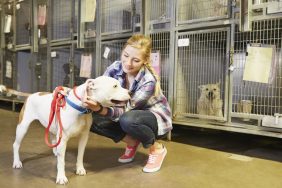
A common reason dogs are dropped off at shelters is because they’re not trained. Generally, it’s a simple matter of spending enough time with the dog, and consistently enforcing rules. Not only is it rewarding for the dog, it’s rewarding for the master as well. When a dog performs a newly-learned command for the first time, it’s cause for celebration. Not only is a well-behaved dog a joy to be around, but training a dog can create an unbreakable bond between dog and master.

By: David Beart

About the Author:

David Beart is owner of the Professors House, a site dedicated to family, relationships, dog training, and household issues.

Pizzeria Recipes

There are 0 comments about this post. Add yours!
Dogs, humans most loyal servants. Dogs are a species that have existed in this world for many many years, and their relation to us humans is nothing new. It is in fact a bond that has existed even in the very beginning of the Homo Sapien era. All in all there are over 400 recognized dog breeds in the world, and probably many more still unknown. Some of them have been bred by humans to be used as pets or perform various other work related tasks. It’s not an unknown fact that not all dog breeds don’t get along, but some of them do, and new breeds are created. Dogs originate from Wolfs, and how they turned into what they are today is unknown, but the possibilities exist that they got along well with other animals too.

Before you think about breeding a dog you need to pay much attention to the dogs parents, their health, pedigree, genetic defects, etc etc, to ensure that they are a good match. Careful consideration should also be given as to what to with the puppies produced. The average litter size for a dog varies according to breed but most breeds average 4-8 puppies or more. There are rare cases when they breed 20 puppies or more, so you should have this possibility planned as well. Taking care of one dog isn’t easy, and taking care of more dogs isn’t any easier. If you breed dogs of well known breeds that can be useful to mankind you can probably make a lot of profit from dog-breeding, but this requires that you train them as well. This requires lots of food, time and careful planning. Most importantly, you must like dogs, if you’re not fond of this species I highly don’t recommend you try this out.

Dogs exist in a variety of shapes and sizes. They are intelligent and well mannered if trained correctly and they learn easily as well. Not only can they be taught to sit, lie or shake hand but also to guide blind people, carry water bottles to the thirsty and pull sleighs through snow covered mountains. Even better they’ll provide a good friend if you’re lonely and will hopefully remain in the service of mankind for a long time to come.

By: John M Williams

About the Author:

For more info on All Breeds Of Dog or a full list of Dog Breeds visit this Dog Training resource website.

DessertUniversity

There are 0 comments about this post. Add yours!